I came to Hamamatsu about 60 hours ago on the Shinkasen (bullet train) from Tokyo, blowing 250-300km/h as I ate a delicious train station bento and listened to my favourite basketball podcast. The sky was clear, so the somehow actually underrated sight of Mt. Fuji was visible for most of the journey. I lucked out by picking my seat on the right side of the train and was mesmerized by the sight all the while. This is a very good time to be Tyler Rowe. As I arrived a full four hours before I could check in to my room at the hostel, I ventured back into the city to check out a few shops, and ended up doing a full, two hour exploration of the most charming and varied suburb northwest of the city’s center.
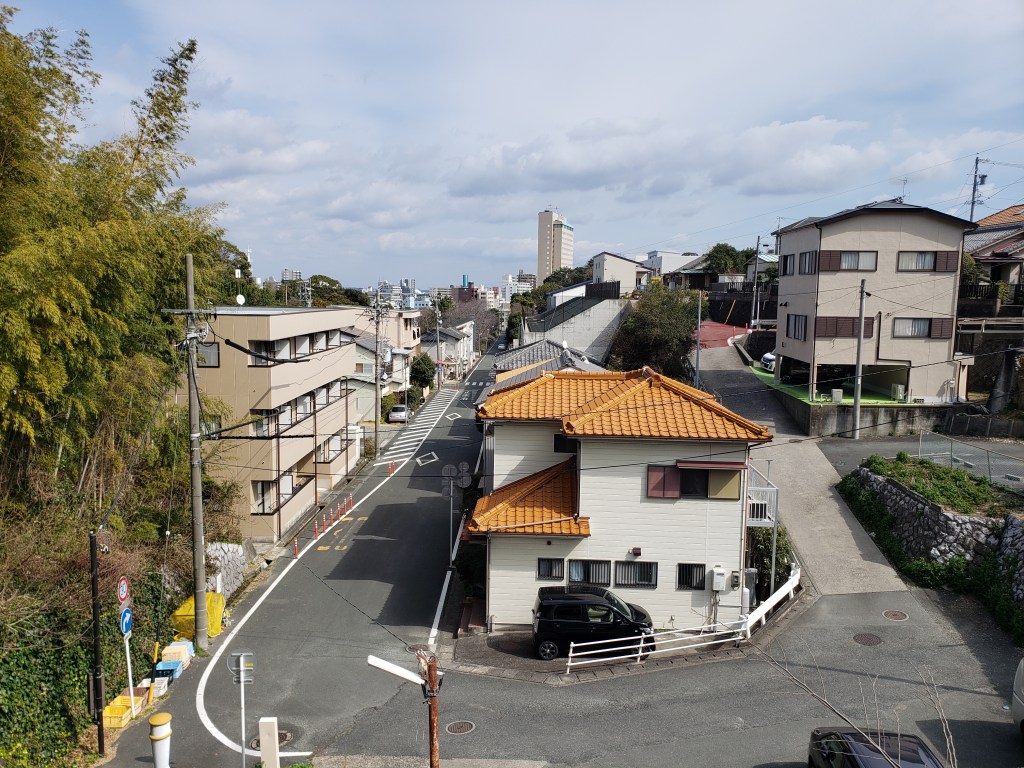
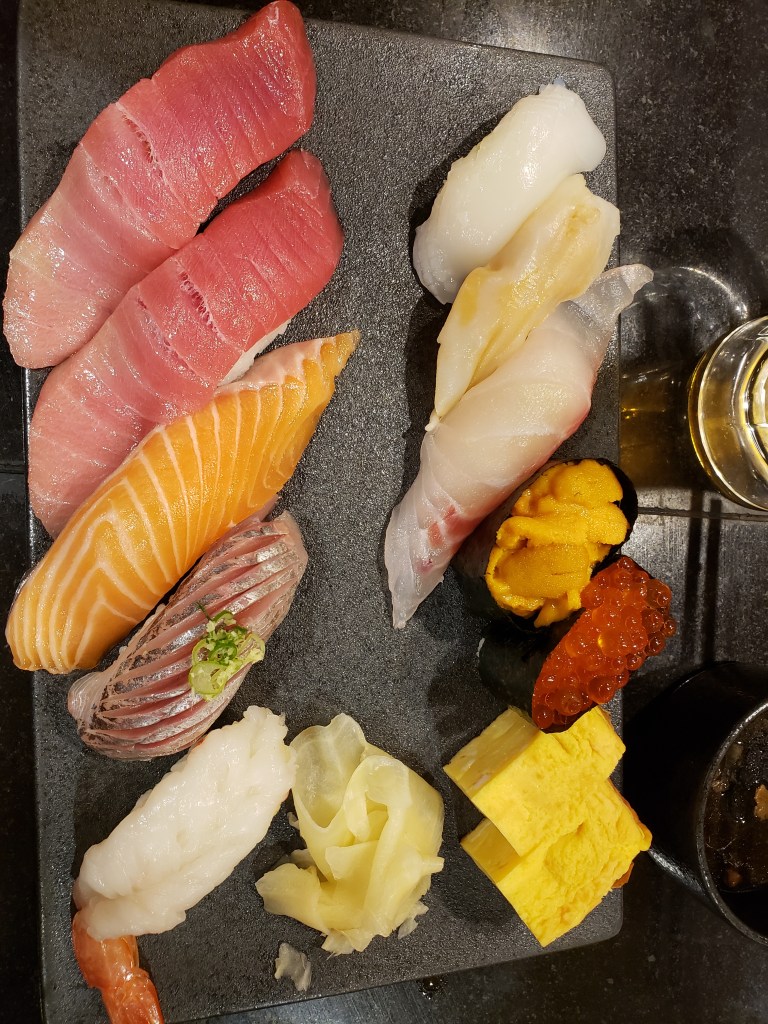
It was warm, and so sunny that I actually managed to get a sunburn in early March. I met some cool Japanese and ex-pat homies the next day who took great pleasure in teasing me about being the whitest person alive, and they were right to do so. After returning to the hostel to put my stuff away and take a shower, I went back into town on the skytrain-like public rail system and had the best sushi I’ve ever had. This area is famous for its eel, and unagi is my fucking favesies. The uni too! Goddamn, son.
Hamamatsu is a city with many immigrants, including a thriving Brazillian community, I was surprised to learn. The story goes that people were offered good factory work after the war to help rebuild the infrastructure and economy, and probably because it’s nice here and home is where the heart is, most families stayed and put roots down. The city has a decidedly different ethnic flavour (can I say that? Can I say “flava”? Because I wanna. I don’t know. I’m sticking with it, with apologies at the ready) than does much larger Tokyo. Sidebar: oh shit! Speaking of Flava, public enemy broke up over a fight between Flav and Chuck D about Bernie! I don’t know much about it, but it feels like my poli-rap dads splitting up after 35 years of marriage. Hamamatsu is also home to a lot of industry. They make a shitload of motorbikes and musical instruments here, and a massive Yamaha plant is about 3 blocks from where I’m currently seated. The instrument giant Roland makes its home only a few blocks further, and houses one of the world’s most cutting edge 3-D printing shops, where, one might assume, they cut edges. This city is much quieter than Tokyo (pffft, only 1.3 million people? Please bud, the last city was as big as my country), and that’s been a welcome change. I can see probably seventeen stars in the night sky, compared to exactly zero.
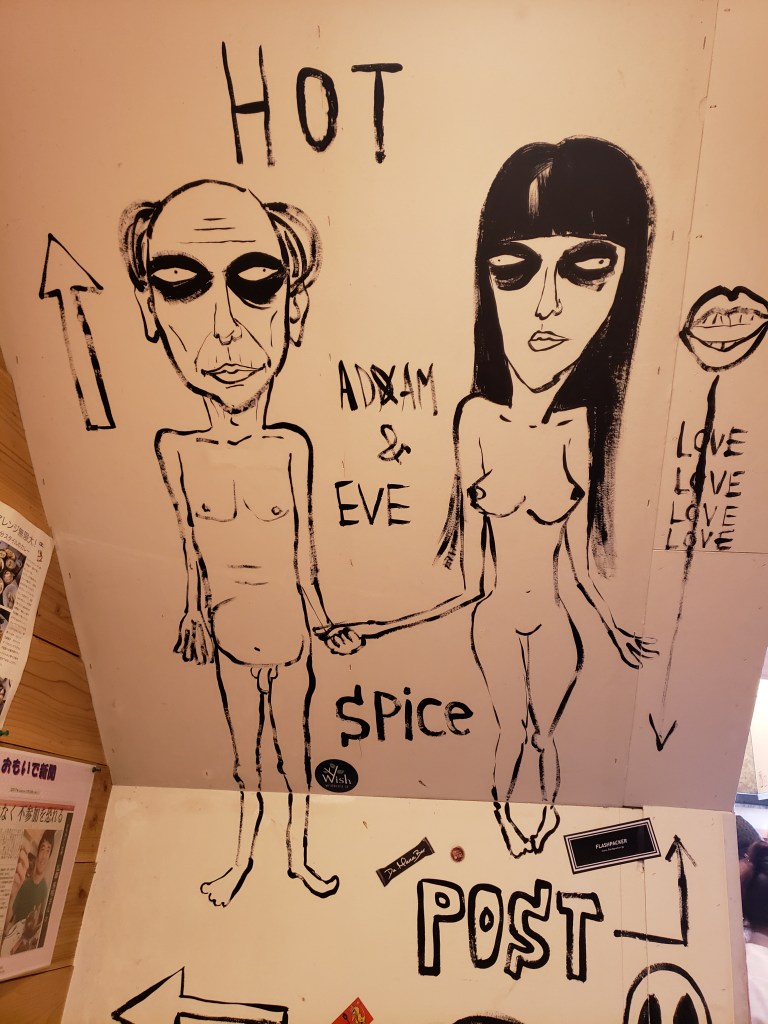
The next day, I planned to check out the Hamamatsu flower park and Hamana lake, but it poured rain, so I found myself eating a really terrific beef curry at a tiny little joint near the central train station with this really cool art painted right on the walls. It was there that I met Mariko, and later at the pub, Filipe from Texas and Banna from Gurugram, India. This turned into a drinking day, but nothing crazy, full of darts and laughs and Filipe and I commiserating about the Super Tuesday results. Filipe was from San Antonio and thought for sure Bernie would take Texas. I thought so too. I went back to the same Sushi restaurant because fuck it.
——————
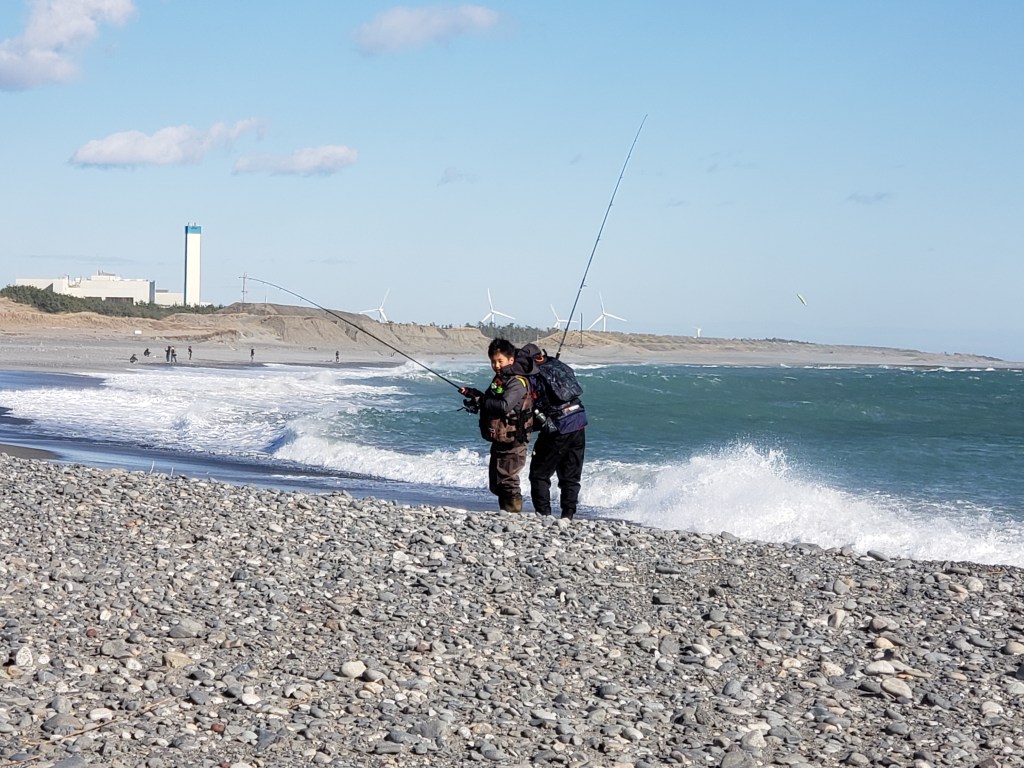
My first Japanese bus trip took me to the Nakawajima sand dunes, that rise some 15 metres high before the shores to the south-east of Hamamatsu, and for the first time in my life, I gazed across the Pacific Ocean from the other side. Nothing to speak of in between me and California but water at volumes I can’t understand. The long, breakwater mounds of collected pieces of y-shaped concrete thrusted from the surf like modern art, or better yet modern furniture, function matching form. A father and son were fishing near me and caught a flat fish that I think was flounder. The son jumped in excited glee at his father’s deft mastery over the beasts of the shoreline. The winds were high, and I was sandblasted like a pair of Guess jeans, still now removing sand from the pockets of my clothes and the not-inconsiderable crevices of my skinny-fat body (shout out to the indispensable Christopher V.).
I had a 10-course dinner of just tempura this evening at a literal mom and pop restaurant with 10 seats. Mom and pop were easily approaching eighty, and while the entirety of the little-but-long meal was excellent, it was capped off with a final course of soft poached egg yolk which was so delicious I couldn’t understand how it didn’t have more ingredients.
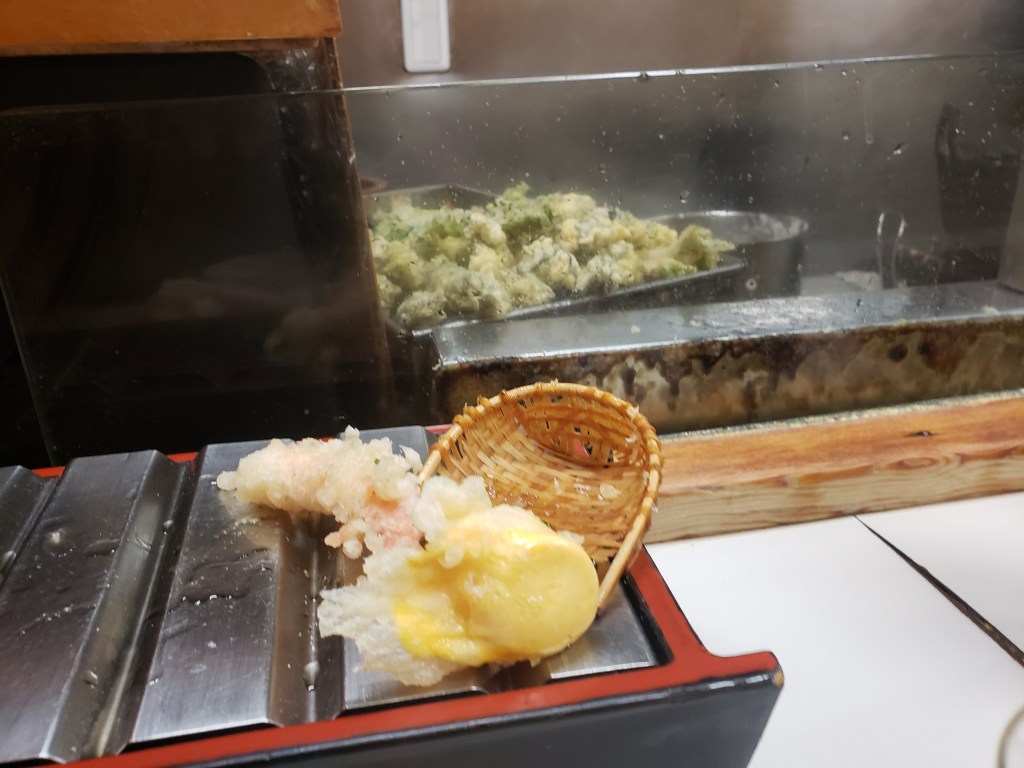
And it wasn’t even my first coursed meal of the day! I wonder how many times in my life I’ll be able to say that? I had lunch at a French restaurant in the Minami Ward, a neighbourhood which felt a lot like a part of Long Beach, California I’m familiar with, but if no one had a gun. I rarely get to eat French food, and it was excellent. And cheap! I decided back in Tokyo that if I walked into a restaurant, that I would eat there no matter how little I understood the menu; this was the most pleasant surprise so far in that respect.

Let them eat hake.
Tonight I saw fighter jets over Hamamatsu on my walk home from the subway stop in the suburb I’ve called home for these two and a half days. I think they were F-15s, and they were probably just running drills, but it was exciting and the slightest bit scary to see four of them carry on overhead in the same direction at night, reason unbeknownst to me. Google either didn’t know why they were up there, or just didn’t want to tell me.
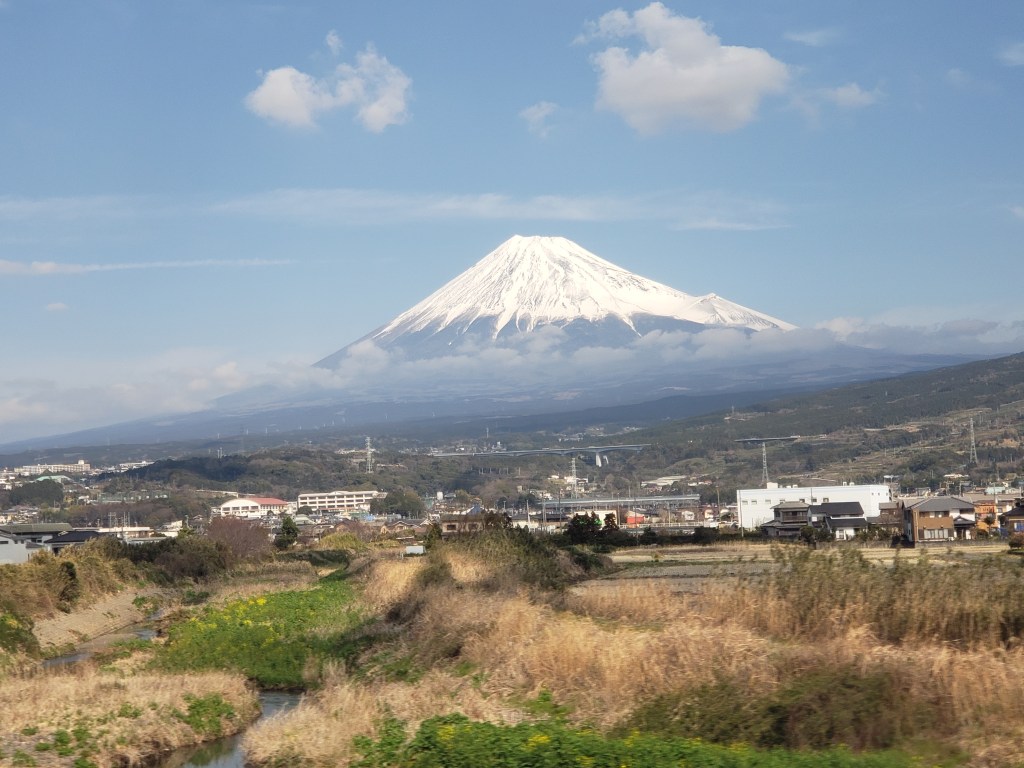
After I add the pictures to this post, I’m going to watch Interstellar, because it’s on Netflix and that’s what I want to do. The hostel has free wine for some reason (!) and I’ve been putting off sampling it. That ends now.
———————
Noam Chomsky is not a perfect political scientist, but he’s rightly called one of the most important thinkers of the past 50 years. More than 30 years after it’s original publication, his Manufacturing Consent continues to be one of the most important books written about the process of informing political choice. Or, more aptly, the process of elites spoon-feeding narratives and policy preferences to the masses that reinforce the power and economic interests of these elites, and by doing so through the media outlets that these elites themselves own under the guise of fair journalism, lead individuals to these preferences as though they were their own. Even though the wants of the ruling class match up so infrequently with the wants of the worker.
This is ubiquitous in our culture, and our culture is to a large extent, our media. All things are our politics, where, along with how we spend our money, manufacturing consent is most powerful. The American newspaper of record, The New York Times, has long gotten a free pass from liberals and conservatives alike for it’s fairness and perspective on economic issues because the framing of economic possibility in America has been reduced in this channel (and those like: The Washington Post, the LA Times, etc.) to portray the center-right neoliberal economic policies of the Democratic as the natural left wing, and the further-right economic policies of the republican party as the natural right. This criticism could also be fairly levelled at MSNBC, the NPR, and many others. Similar forces are at play in Canada.
The decidedly right-of-center neoliberal preferences of the New York Times (and all mainstream media outlets to varying degrees) are on full display when it comes to the matter of one Bernard Sanders, and his current attempt to wrestle with the neoliberal forces in, and married to the Democratic (and of course, Republican) party. It is well said that “it would be nice to have a democracy, instead of pretending to”, and democracy is impossible without an unbiased news media, the so-called “fourth wall”. It may be that this arrangement between the media and democracy has never existed, but as the consumer gets savvier, so too do the salespeople of a status-quo ever more craven in the collection of money and power for the elite. In this part of the world, many if not most of us are voting against our class interests because we are told to. In North America, people still believe that conservative governments are better with money, because the media lies to them.
Super Tuesday has happened, and the list of grievous occurrences is too long to list; I will constrain myself to a few. Amidst the closing of polling stations in non-white neighbourhoods (for elections that, by the way, still occur during working weekday hours) and the dishonest gaming of the lords of the Democratic Party, there is the full-blown heel-turn of Elizabeth Warren for the Sanders team to deal with, the fat finger of Barack Obama on the scale behind the scenes, the shrill arrogance of Hillary Clinton appearing as an attack helicopter for the establishment. Michael Bloomberg has done his ugly works in the race directly and now resumes his tasks as autocrat funneling money into the Biden campaign to avoid a raise in his taxes. The billion dollars he spent to be in the race in earnest for two weeks was money well spent for him, considering that if he had to pay taxes at even the rate that middle-class people do who could not amass his wealth in 1000 lifetimes, the bill would be much higher. The establishment has coalesced in a critical moment, which is smart of them. The problem is how it holds hands with all that consent manufactoring we’re talking about.
The day was not won by Sanders, but all is not lost. As the field narrows, Biden may be left alone at some point on a debate stage with Bernie. If this day is not avoided, which is to say if Biden’s handlers cannot keep this from happening, Biden’s increasing dementia (I’m not exaggerating, he’s losing it – check the tapes) will be on full display. Sanders, who has treated his old friend Joe with kid gloves to this point, appears to have had enough of the duplicitousness to which he is constantly subjected and never himself engages in. It is a contest I would very much like to see. Bernie’s chief campaign strategist Chuck Rocha was on a program I watch, and his demeanour suggested two things to me: that Rocha loves his job, and that he’s not worried about a thing. But Rocha himself will be alright, and he’s a junkie for the game. I’m not sure how to feel as it relates to the movement.
I find it difficult to be calm about all this, because I think a Sanders win could represent what could very well be a final chance for working people to be represented and make a comeback in America the likes of which hasn’t been seen since Roosavelt’s New Deal, nearly 90 years ago. Nothing less than a syndicalist labour revival will do to set us on the path to justice for all. There should be no half-measures in a society that thinks itself fair and free on this point. In contrast I think a Sanders loss could mean a long list of billionaire presidents who are much more effective at fascism than the vain and uninterested Donald Trump. I am certain that in a one-on-one, Trump has to be licking his chops for a chance to take a few months worth of pot-shots at Biden, who he can attack from both the left and right on policy, and who is ripe for all manners of ridicule. I am just as sure Trump is less bullish on a tussle with Bernie, who is a better populist, a defter politician, and a smarter and more likeable man than Trump on his best day.
The next chapter is before us. Like always, politics breathes, and it writhes. Consent is manufactured. Men in top hats bluster over the thought of raising the minimum wage, as though Marx himself had emerged from the crypt. Pearls are clutched for hearing the whispers of unions. And all the while, people die in America because they can’t afford their insulin. All the while, there are still places in Canada where people can’t drink the water that comes out of their sink faucets, single-payer healthcare or no.
 Dummy Fat Japanese Adventures with Largefather Rowe